
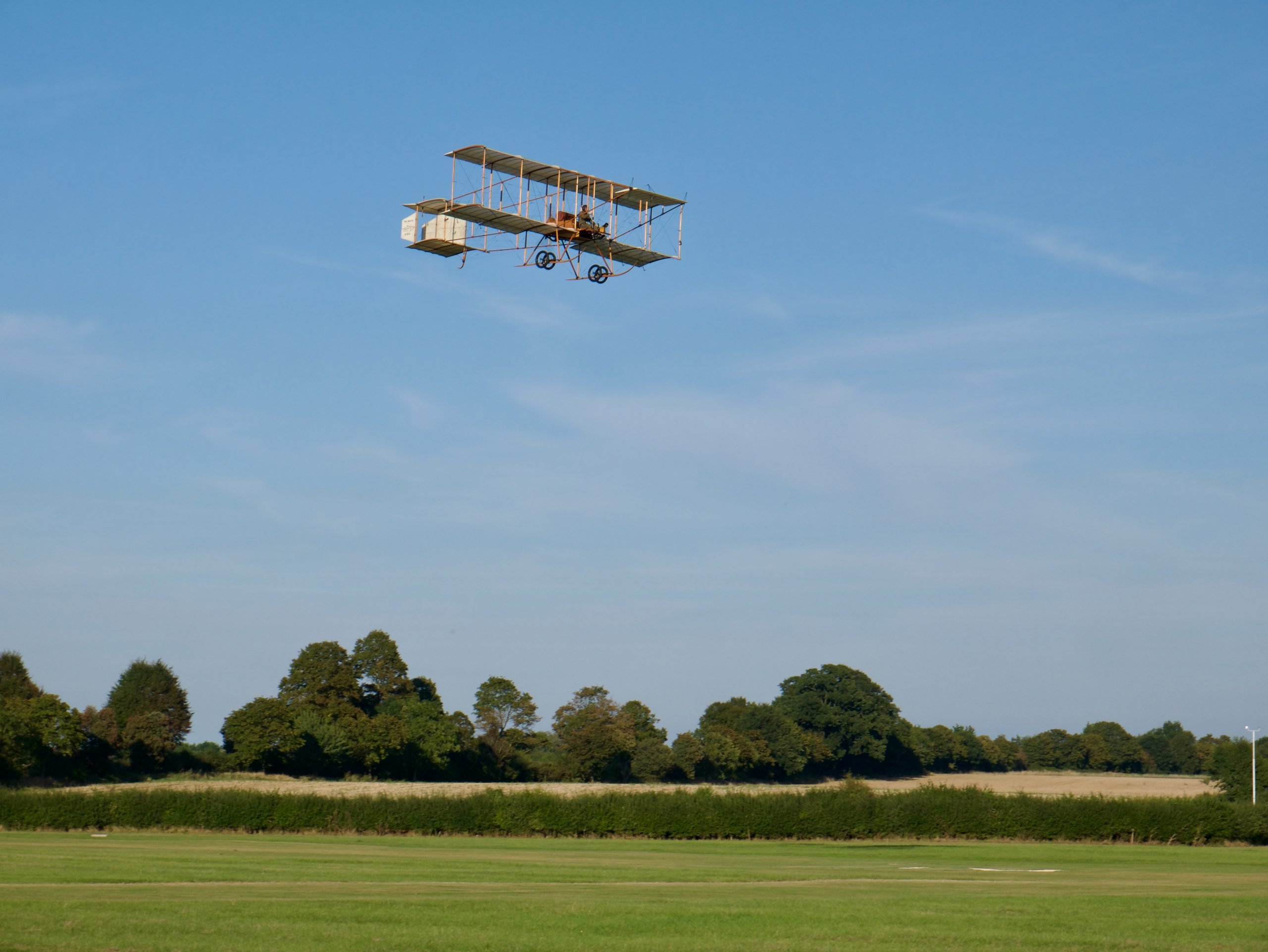
The big problem with flying
In my last blog post, I was quite critical of aviation, the airline industry in particular, and its contribution to climate change. In this post, I am looking forward to writing much more positively about the industry in which I worked for fourteen years. It is, in many ways, a wonderful industry, full of adventure, innovation and brilliant people who have done incredible work to make it the success it is.
But the starting point is the problem which I described in that last post: how the speed of air travel - the very thing which gives it such advantage and value over other forms of transport - is the primary reason for its being so dangerous to the climate.
Aeroplanes enable us to both travel the world and warm the climate much faster than any other popular mode of transport. We like the speed of travel, and it’s easy to ignore the damage. They offer us the chance to travel thousands of miles in a day and, despite most of us being increasingly aware that it will cause harm to our planet, there has not yet been any sign of a reduction in demand for those holiday flights.
It’s not just flying we’re struggling with
This is just one example of how difficult we are finding it to take actions which put the brakes on climate change. We have known about the dangers of the climate crisis for decades, and now, even though it is no longer just a future risk but something that we can see and feel happening around us, our global carbon emissions are still continuing to rise year on year, making the situation rapidly worse. This is despite the great developments that have been made in green energy. Our demand for energy is increasing so rapidly that green technology can’t keep up.1 We know we are accelerating into ever greater danger, but we seem unable to take our feet off the gas.
Why are we finding it so difficult, and what can we do about it?
Why it is so difficult can largely be explained through psychology. This is great news on at least two fronts. Firstly, when we see how poorly adapted our brains are to deal with climate crisis, it can help alleviate some of the crushing guilt which we might, at times, experience, when we realise our own contributions to letting it get so out of hand. Secondly, having some understanding of why our brains are so bad at dealing with the climate crisis might help us devise strategies which actually have a chance of working.
This is where aviation can help. Humans are not only poorly adapted for dealing with a climate crisis, we are also poorly adapted for flying aircraft. But although we have not we have not worked out how to start reducing our carbon emissions, we have become very good at avoiding aircraft accidents.
Our brains, and our senses, simply did not evolve to operate a machine travelling at one hundred miles an hour, let alone five hundred (an airliner), a thousand or even many thousands (fighter jets all the way through to space craft). Our senses play tricks on us. For example, when we lose sight of the horizon, the g-forces which are easily generated when travelling at speed can lead us to lose track of which way is up. we can easily think that we’re flying straight and level when we are in fact in a spiral dive. This happened more than once on the first successful crossing of the Atlantic in an aeroplane in 1919, the pilot John Alcock losing control in a cloud, and only being able to recover when the aircraft fell out of the bottom of the cloud and he could see the horizon again. And our brains have built-in biases and prioritisations which can lead us to actions which, to an outside observer, perhaps listening to the cockpit voice recorder found in the wreckage of a crashed airliner, might seem bafflingly irrational.
From the early days of aviation, as aircraft became increasingly rugged and reliable, the proportion of aircraft accidents attributable to human error rose. You can redesign aircraft, engines and components, but you cannot redesign the human brain. You can train it to some extent, but what the aviation world came to realise with more clarity than perhaps any other industry, is that you cannot just tell a human brain how it should respond to a situation and then expect it to do what it has been told time after time without fail. The real progress comes when you accept our brains for what they are with all their strengths and weaknesses, and devise systems and procedures which are based on the understanding that our brains will keep on working in pretty much the same way that they always have.
Lessons learned the hard way
On 29th December 1972, the crew of Eastern Airlines Flight 401, after moving the lever to lower the landing gear in preparation for landing at Miami Airport, noticed that a small light bulb, which usually illuminates to confirm that the landing gear is securely locked down, was still unlit. After informing air traffic control that they needed to delay their landing, and setting up the autopilot to maintain 2,000ft in a holding pattern, the attention of all three crew members turned to ascertaining why the light had not illuminated, and how else they could be sure of the gear being locked down. None of them noticed when, after flying level in the hold for eighty seconds, the aircraft slowly started to descend. At one point, as they continued to descend, an altitude warning chime sounded, but nobody seemed to notice. When they did realise what was happening, there was not enough time to do anything about it, and the aircraft crashed into the Florida Everglades with the loss of more than half of the 176 people on board.
The subsequent investigation showed that the landing gear had in fact been safely locked down. The probable cause of the unplanned descent was the captain accidentally nudging the control column while turning round to speak to the flight engineer, meaning that the only technical malfunction on the aircraft which contributed to the crash was a faulty bulb.
Aviation’s greatest gift to the world
While aeroplanes have given humanity the gift of speed, something of a double-edged sword, the aviation industry has given us a far greater gift, and one that comes with no strings attached: a wealth of knowledge on human frailties and how to mitigate them - the field known as 'Human Factors'.
Through frank and through investigations into incidents and accidents such as the one involving Eastern Airlines Flight 401, and a scientific approach to adapting training and procedures in light of the lessons learned, the aviation industry has done an outstanding job in making flying safe. The knowledge it has gained in the process has been fed into many other industries, such as medicine, and brought about a huge reduction in fatal accidents there too.
Can it be applied to the climate crisis?

Just trying harder isn’t good enough - we have to be smarter than that
I have so much sympathy for crew of Flight 401. They made a fatal error, but it was not through wilful negligence. Almost right up to the moment of impact, the crew were conscientiously trying to troubleshoot a problem, and ascertain the state of their landing gear before attempting to land. But their trust in the autopilot, and other protection systems such as the altitude warning chime and the distraction of what appeared to be the immediate threat - the unlit bulb - led them to overlook the risk in flying with nobody monitoring the height.
One might think that, having learned from the error of these pilots, no pilot would ever again make such as basic mistake as failing to monitor the flight path of the aircraft. But pilots, myself included, continued to fall into the same trap time after time, either in real life situations or in training scenarios in the simulator. It is just so easy to get pulled into the details of the problem that the other pilot is working on, and before you know it, nobody is watching the big picture.
Fortunately, the vast majority of these lapses have not led to an accident. The fact that pilots will continue to get distracted, and place too much faith in the infallibility of the automatics, has been a combination of technological innovations such as Enhanced Ground Proximity Warning System (EGPWS), and repetitive training in how to manage problems in flight in ways that allow at least one pilot to be monitoring the flight path at all times. We will never know how many accidents have been prevented by accepting that human brains will always be prone to being distracted, and very bad at monitoring highly automated, very reliable machinery.
How can we apply this to the Climate Crisis?
By any standards, the climate crisis is a disaster caused by human error, or rather, a long, long list of human errors, which we are still continuing to repeat over and over again.
So what is it about the human brain which means that we cannot seem to stop doing things that worsen the climate crisis? Or, to more specifically address the subject of this blog, means we cannot seem to stop getting on board an aeroplane to go on holiday, despite knowing that it is harmful?
And what can we learn from aviation safety which might help us to arrest what feels like an unstoppable journey towards climate disaster, and find effective ways to change course towards a safer future? To be more specific again, what will give us the best chance of conquering our long-distance travel addiction? And yes, however ungrateful it seems, how can we use aviation’s greatest gift to the world to reduce the demand for aviation?
These are not rhetorical questions, I would genuinely like to hear ideas. But I will offer a couple of suggestions to get the ball rolling.
1. Loss aversion
We know that we are incredibly bad at giving things up, even when we fully understand why we should. Eighty percent of New Year’s resolutions (like cutting down on sugar, alcohol or screen time) fail by mid February. I can relate to that. I would like to cut biscuits out of my daily life, but my will-power is not strong enough.
Why we are so unsuccessful at making sacrifices is largely because we feel the pain of loss more intensely than the pleasure of gain.2 Therefore, if we we see a change as a sacrifice in the here-and-now, it is unlikely to stick, despite knowing long-term benefits. For me to have a realistic chance of not eating a biscuit or two halfway through each morning, I need to make an effort to find a healthier alternative that is at least as convenient and enjoyable.
If I’m honest, I might well still be flying on holiday if choosing not to had felt like a sacrifice. The initial reason we stopped was not climate change, it was because trying to get a baby, toddler and all their equipment through the airport seemed like far more effort than it was worth.
Strapping them into the car, throwing all the kit into the boot and driving for a few hours was far more tempting. And then we discovered we actually enjoy local holidays just as much if not more than long-distance ones, so, apart from one mini experiment, that’s what we kept on doing.
Therefore, to stand a chance cutting our travel emissions, we need to see short-distance travel as a better travel for us, individually, right here and now, than long-distance. I strongly believe that, in the vast majority of cases, it really is.
2. Herd mentality
Another human factor is that we are hugely influenced by what we see other people doing. We naturally assume that other people’s actions reflect correct behaviour (Social Proof), we assume that a group will be better informed (Informational Influence), and we conform with a group in order to be liked or accepted (Normative Influence).
Surrounded by other pilots whom I liked and respected (and still do by the way), I didn’t seriously consider quitting my flying career due to climate concerns until I realised there was another group of people who had already done it. And even then it took a while.
While we see other people choosing distant holiday destinations, we are unlikely to worry about doing the same.
Therefore, we need to make sure that people choosing shorter journeys are seen. Millions of people already find all they want from their travel without travelling far (and it’s worth remembering that, not long ago, almost everyone did), but in order to convince more people that short-distance travel is the way forward, we need them all to spread the inspiration!
It needs to feel mainstream and, ideally, more desirable and cool than long-distance travel.
And there’s no good reason why it shouldn’t be. Long-distance travel has historically been seen as cooler (possibly due in no small part to the billions spent by airlines on marketing), but trends are shifting. If we can help them shift a bit faster, let’s do it!
Cause for hope
There are a whole host of other psychological factors which help to explain why we are responding so ineffectively to climate change, many of which are explored in the fantastic podcast series, ‘Your Brain on Climate’, hosted by Dave Powell, with bystander effect, optimism bias (again!), pluralistic ignorance and change blindness, being just a few.
In aviation, recognising our frailties, and accepting them as inevitable, has led to the to machines and procedures being designed in ways which reduce the likelihood of errors, and also in ways which massively reduce the likelihood of one error on its own leading to a disaster.
But studying Human Factors is not just about preventing accidents and disasters. Our minds have frailties but they also have awesome capabilities. Whatever we want to achieve, understanding and accepting how our minds work gives us the chance to plan how we do things in order to capitalise on our strengths and mitigate our weaknesses, and give us the highest possible chance of success.
Do we have enough motivation to succeed?
This could be an awkward question with awkward answers. But we need to be realistic about our chances of success if we leave solving climate change to businesses and governments.
Businesses are, on the whole, motivated by profit. There is a strong, profit-driven incentive for airlines to prevent aircraft crashes, but there is no such incentive for being responsible about aircraft emissions in the face of the climate crisis, not for the next few years at least.
Governments are motivated by winning the next election - another very short-term motivation.
It is people like you and me, who are worried about our future and even more worried about the world our children might be facing that really have the motivation, and possibly less to lose in the short term than airlines and governments in making the responsible choice. Change needs to come from us, the public, the consumers, the people. If we can set about solving the climate crisis with as much passion, commitment, and expertise as the aviation world found to solve aircraft accidents, we might have a chance.
It will be far from easy, but those aviation safety has given us a huge helping hand - it has shown us how best to use our brains when we faced with problems we have never faced before.


