The far side of the Moon, and beyond
Earlier this month, the crew of Artemis II returned from a successful flight around the moon, and in doing so broke the record for the farthest humans have ever travelled from Planet Earth.
Their farthest point from Earth was 252,756 miles and, to reach that point, thousands of miles beyond the Moon, and come back again took just over eight days (from the Trans Lunar Injection burn to splashdown). Their average speed over those eight days must have been well over 2,600mph. Their maximum speed was 24,664mph.
It was awesome stuff, but it was not slow, local travel. I want to enjoy and be excited about people going to the Moon, but it does seem to conflict a more than a little bit with my views on what kinds of adventures are sustainable in a climate crisis.
My airline career came to an end because I failed to reconcile flying for a living with the need to look after our planet. Can I feel I excited about Artemis II without undermining everything I’ve said about looking near first?

What was Artemis II’s carbon footprint?
A good starting point, I initially thought, would be to find out what Artemis II’s direct contribution to climate change was. But after half an hour of head-scrambling Googling, I gave up on finding a definitive answer. It seems very complicated, largely due to different kinds of gasses emitted by the different propellants used during the different stages of the spacecraft’s flight. The big, central rocket engine of Space Launch System burns hydrogen fuel, so doesn’t emit any CO2 in flight. The actual carbon footprint comes earlier, in the production of the fuel. But a lot of water vapour is created by the burning of the fuel, and water vapour has its own climate warming effect (think airliner contrails). The solid-fuel rocket boosters emit chlorine, aluminium oxide particles, and black carbon soot - all very potent greenhouse emissions, especially at the stratospheric altitudes that the rocket must pass through.
The most useful statistics I could find were in a LinkedIn post by the technology podcast Thinking on Paper - they claim that Artemis I (which would be similar to Artemis II), emitted around 116 tonnes of CO2.1 That’s about the same as one reasonably efficient large airliner crossing the Atlantic, or four private jets. But, due to the potency of the non-carbon emissions, Artemis II’s overall contribution to climate change would be significantly greater. To cut to the chase, Artemis II was not a clean, climate friendly journey, but, to be fair, it never claimed to be.
If Artemis II’s carbon footprint for its ten-day flight was equivalent to one airliner crossing the Atlantic, or even ten airliners crossing the Atlantic, then it is clearly a tiny contribution in comparison with the twenty-six million tonnes of CO2 emitted by the aviation industry in the same time period between its launch and splashdown.2
In the wake of pioneers
This was the first manned flight to the Moon for more than fifty years. It was a pioneering flight. Although it is clearly very significant, we can never truly know the significance of pioneering achievements until we have seen what follows.
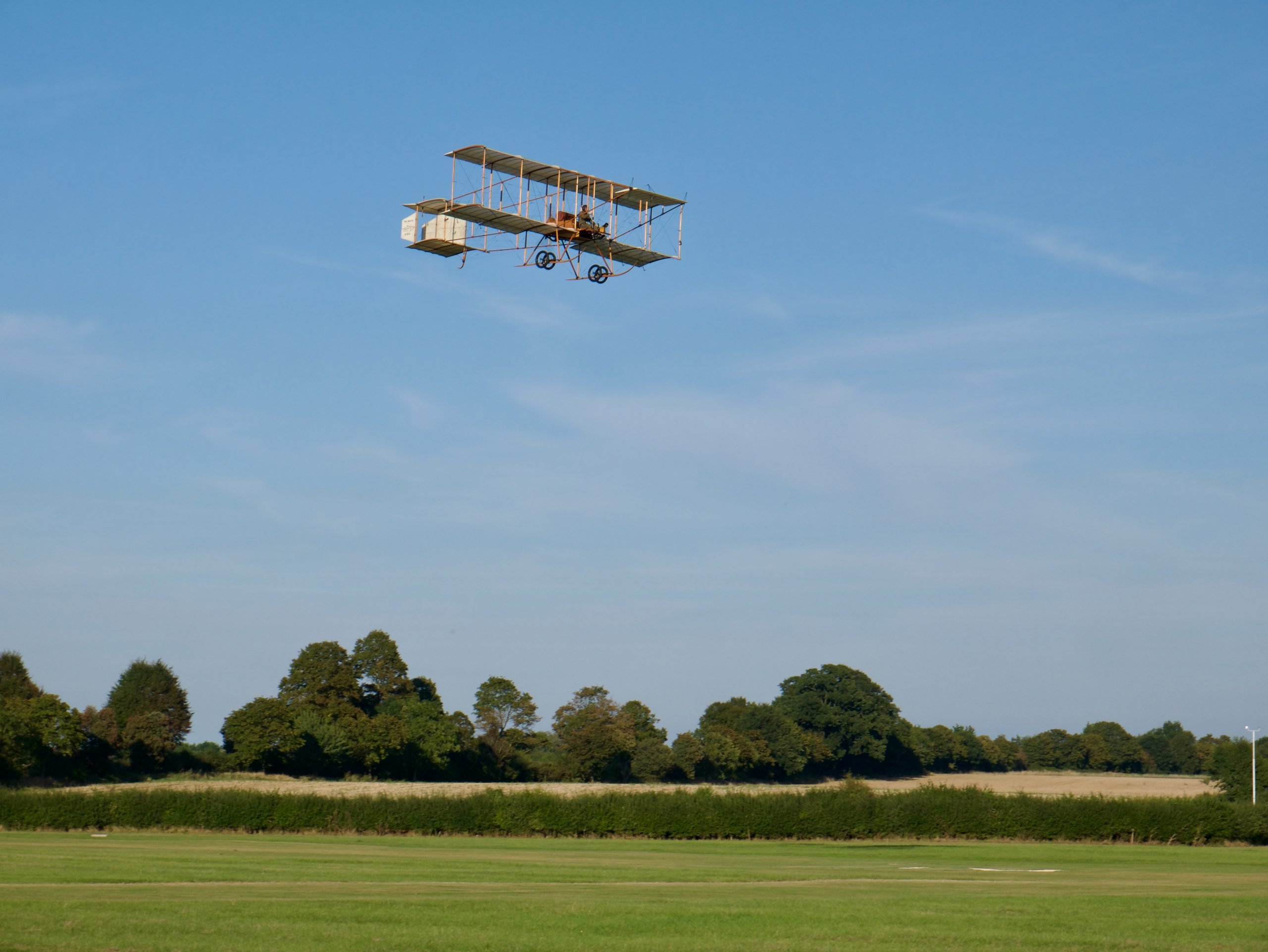
In 1903 Wilbur and Orville Wright became the first pilots of a powered aeroplane. In 1909 Louis Blériot made the first flight across the English Channel 1909. The first flight across the Atlantic was made by John Alcock and Arthur Whitten Brown in 1919. In 1930, Amy Johnson became the first woman to fly solo from London to Australia. In 1969, Neil Armstrong became the first person to walk on the Moon, and in 2026 Christina Koch became the first woman to fly around it.
The first passenger service by aeroplane across the Atlantic was in 1939. Air travel started growing rapidly after the Second World War, and in recent decades, thanks to a combination of improving technology and government policy, it has come within reach of millions of people on moderate incomes within the Global North.
What if the same were to happen for lunar flight? What if we knew that, fifty years from now, lunar flight would be within the financial reach of ten percent of the worlds population,3 but we also knew that, if everybody at that time who could fly to the Moon actually chose to do so, there was a high probablity of the Earth’s climate becoming dangerously unstable? We might well hope that the relatively few who could financially afford to make a sightseeing trip to the Moon would choose not to, having understood that the cost to life on Earth was too high. Or, if the temptation seemed too difficult to resist, that world leaders would intervene to restrict or ban pleasure flights for the few who could afford it, in the interests of protecting all life on Earth.
Given that, at the time of writing, less than a thousand people have ever been in space, twenty-eight people have travelled close to the Moon and twelve have actually landed on it, most of us could say at this point that forgoing travel to the Moon would not be a great sacrifice to our lifestyles. It might be quite fun to bounce around in a space-suit and try to play golf in seventeen percent gravity, but it is possible to live, love, laugh, cry, sing, dance, play, party and everything else that makes us feel alive without it.
Can we all be explorers, if we want to be?
But what about that human urge to explore, to push boundaries, to see what lies beyond the horizon?
That is something we will never be able to suppress, and I don’t think we should try. It is part of us. But, given that being among the first people to walk on the Moon, or Mars, or to reach the South Pole, is never going to be something that everyone can achieve, what can the rest of us do?
Firstly, can say that we have been to the Moon, the poles, the top of Mount Everest, and we might one day go to Mars. Not, for most of us, as individuals, but we can celebrate and revel in the collective success of humanity as great explorers. Not everybody can go to the Moon, but a few weeks ago, four people did. They were the chosen representatives of our species, or even better - all life on Earth. We have been able to follow their journey, hear them speak, watch their videos, look at their photos, and be thrilled by it all. They might have been the astronauts, but we went to the Moon. We can all be enjoy it, and proud of it.
I love exploring vicariously through the stories of great expeditions. It allows me to travel through time as well as space. I have enjoyed stories from the Apollo programme, as well as terrestrial exploration. Some of my favourites have been the accounts of the early Mount Everest attempts, which led, in 1924, to the tragic losses of George Mallory and Sandy Irvine very close to the summit, with thequestion of whether they had made it to the summit first still unanswered; and the ocean adventures of Joshua Slocum in Sailing Alone Around the World (1900) and the crew of The Kon Tiki Expedition (Thor Heyerdahl, 1948). I am currently reading about the journeys of Alexander von Humboldt in Andrea Wulf’s biography The Invention of Nature. The thrill of the adventures in all these accounts are now laced with some sadness about how the world has changed since they took place. I’m sure that sailing a balsa wood raft across the Pacific in 2026 would still bring many incredible encounters with wildlife, but due to over-fishing and ocean acidification, it would not match what the crew or the Kon Tiki experienced and described.
Secondly, we can emulate the pioneers in so many ways. We have the whole history of human discovery to choose from. As most of us will not be able to construct our own spacecraft, maybe we can emulate the explorers who canoed rivers, climbed mountains, walked continents, and sailed oceans. Or the curious minds which dug up fossils, or explored life around them and found that trees communicate with each other through their roots, bees communicate by dancing, and African buffaloes make decisions by means of a vote in which only the adult females are eligible.4
At the end of their Pacific crossing, the crew of the Kon Tiki arrived on a South Polynesian island, not unlike that one that is home to Moana in the 2016 Disney film. In opening scenes of the film, Moana struggles with an internal battle between the call she feels to explore the ocean with the caring and pragmatic advice of her parents and the village elders: that the island is rich and fertile and everything she needs is right there if she can only be content with it. Only her grandmother encourages her to follow the call of the sea.
I expect we will always have, and always need, both Moanas and village elders. They think of the future in different ways. To put it very simply, Moana is a dreamer: she thinks about how the future could be better. The elders are pragmatists: they think about how they can best makes sure that there will be a future.
Seventh Generation Stewardship is an idea based on an indigenous tradition, believed to have originated in what is now North America from Great Law of the Iroquois. It requires us to think seven generations ahead when we are making decisions on how we live now. Will our actions benefit the seventh generation, or hurt them? If we live by this principle when we think about how we explore and enjoy our world, and beyond, how might if affect our choices?
Right now, I have awe and gratitude for the crew of Artemis II, for their amazing achievement and risking their lives to bring us wonderful views both of our nearest neighbour in the Cosmos, and our very own planet, Earth itself. The first human-crewed spaceflight around the Moon was Apollo 8, flown in 1968, and the astronauts were as much affected by the distant view of Earth as they were by the close-up view of the Moon. ‘We came all this way to explore the Moon’, said Bill Anders, ‘and the most important thing is that we discovered the Earth.’
Earth will always be our best spacecraft, and we must do everything we can to take care of it. Whether the seventh generation looks back at Artemis II with awe and gratitude, or sadness and anger, depends on what happens next.
- https://www.linkedin.com/posts/artemis2-spaceeconomy-rocketemissions-ugcPost-7445635471231094784-iaX7 ↩︎
- 950Mt in 2023 https://www.iea.org/energy-system/transport/aviation ↩︎
- An arbitrary figure, although loosely based on the statistics that currently roughly 11% of the world’s population flies in a given year, and 80% of the world’s population have never flown https://www.sciencedirect.com/science/article/pii/S0959378020307779#s0065 ↩︎
- https://onetreeplanted.org/blogs/stories/nature-fun-facts?srsltid=AfmBOoq1flcGGas7u8JDuzVj7T5Gob_5KgUQKvebX3z8yr2juiKrG4vV ↩︎